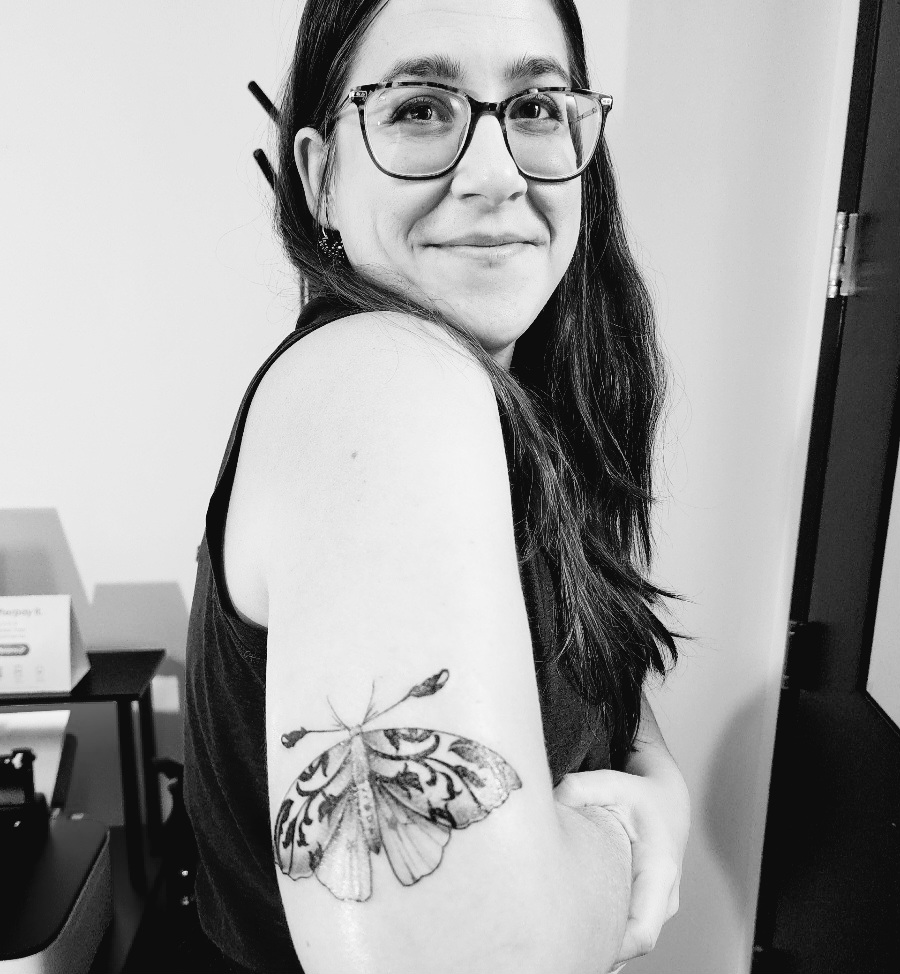
Tattoos are more than mere ink embedded in skin; they can serve as a profound medium for storytelling and co-creating meaning. From the perspective of Narrative Therapy, tattoos provide a unique way for individuals to externalize, reinterpret, and reclaim their personal narratives. Throughout human history, they have been powerful tools in shaping and sharing all manner of social constructions: the self, community, culture, spirituality, so on and so forth.
Tattoos as Externalized Narratives
Narrative Therapy emphasizes the importance of externalizing our internal struggles, beliefs, and experiences. By conveying our internal stories into the external world, we create space for exploration, re-authoring, and healing. Tattoos, as visual and (semi)permanent expressions, externalize our stories, sometimes without our intending to do so. A flash tattoo may signal a love of singular spontaneity or an opportunity to bond with loved ones; amidst a backdrop of similar tattoos, it may signal a recurring pattern more indicative of seeking behaviors: connection, thrills, spending, pain.
Tattoos also commemorate significant milestones, honor loved ones, and symbolize personal transformations or rites of passage. For example, a phoenix rising from the ashes could represent overcoming adversity, while a date or name might mark a pivotal moment or connection. In Narrative Therapy, symbols can be tools for revisiting and reinterpreting these stories in a way that fosters continued growth, nuance, and depth.
Reclaiming Identity Through Tattoos
Tattoos often serve as acts of reclamation, empowering people to rewrite their personal narratives. Survivors of trauma, for instance, may use tattoos to transform painful memories into empowering symbols. A client might choose an image that represents strength or healing to overwrite a narrative of victimhood. Trauma survivors may also choose to tattoo their bodies as a distinct act of reclamation - of taking back control of their bodily autonomy, coping with sensations of pain, and how their body presents to the external world. It can also be a physical act of armoring, or self-protection.
In Narrative Therapy, we explore how dominant societal and familial narratives have shaped our sense of self. Tattoos can be an act of alignment with or even defiance of these narratives, declaring,
"This is who I am, and this is my story."
This process aligns with Narrative Therapy’s goal of empowering individuals to become the authors of their own lives.
Over the years, many of my clients have shared stories about how their tattoos also serve as powerful reminders affirming their identity and growth. Tattoos placed in visible areas, such as the hands and forearms, serve as daily words or images of encouragement on their respective journeys. For one client, a tattoo of a spoon is a reminder of spoon theory and their finite capacity each day to address the tasks of daily living. It helps them to prioritize and focus their energies on what matters most each day. For another client, looking forward to a new tattoo was a way to build future orientation, meaning, and hope into their life at a time when suicide felt like the only option. It became a meaningful guide star, and the tattoo was imbued with meaning that was not originally intended for it.
Tattoos and the Multi-Storied Self
We are multi-storied beings, holding many narratives at once. You may have heard this referred to as multiplicity or even multitudes. Tattoos reflect this complexity. Each piece of ink tells a different part of the wearer’s story: the joy of a birth, the grief of a loss, or the hope for a better future. As Narrative Therapy highlights, our stories are not fixed; they evolve as we grow and change.
The permanence of tattoos may seem contradictory to this evolving nature, but they often serve as a snapshot of a specific moment or belief. Revisiting the meaning of a tattoo years later can invite new insights and interpretations, demonstrating the fluidity of meaning-making in our lives. The professional removal of certain tattoos can also aid us when we no longer wish to highlight or express certain aspects of our past selves or histories any longer. This is often the case for former members of gangs and other groups where tattoos are in-group identifiers or indicators of criminal activity.
Tattoos as Conversation Starters
Tattoos are communal. They spark curiosity and invite storytelling.
“What does your tattoo mean?”
This question is often the beginning of a deep and meaningful conversation about signicant moments in our lives, even if it was the moment of being tattooed itself. In Narrative Therapy, sharing stories with others is a key part of the healing process. Tattoos provide a tangible entry point for dialogue, helping people articulate and share their life experiences in ways that foster connection and understanding.
This is especially true for tattoos that carry specific meaning, such as the semicolon (;) tattoo. Semicolon tattoos are a powerful symbol often associated with mental health awareness, suicide prevention, and resilience. They represent a place where a writer could have ended a sentence but chose to continue instead. This metaphor resonates deeply with those who have struggled with mental health challenges, particularly suicide-related behavior, as it symbolizes a decision to continue life despite difficulties.
Furthermore, these conversations allow others to witness and affirm the new narratives embodied in the tattoo. When someone listens to the story behind a tattoo, they become a participant in validating the meaning and intention behind it. This process of witnessing can be profoundly healing, as it reinforces the individual’s agency in re-authoring their story and invites the story to live not only within themselves but also in their relationships. In this way, tattoos not only tell stories but also weave them into the fabric of human connection and understanding.
Tattoos as Cultural Narratives
Tattoos are not just personal stories; they carry cultural narratives as well. Across history and societies, tattoos have been used to signify identity, heritage, and belonging within a larger cultural context. From Polynesian tatau to Japanese irezumi, tattoos often tell the stories of entire communities, reflecting shared values, beliefs, and histories. Many stick-poke and other traditional tattooing style are still in practice today, both as thriving community practices and as people seek to reconnect with their ancestral roots.
In Polynesian cultures, for instance, tattooing is deeply rooted in tradition and spirituality. The intricate patterns often symbolize genealogy, rank, and achievements, serving as a visible record of an individual's place within their community. Similarly, in Māori culture, tā moko represents lineage and personal identity, with every curve and spiral holding significant meaning, and large gatherings are often held to celebrate the first receiving. These tattoos are not merely aesthetic; they are living embodiments of cultural narratives, passed down through generations. They signify connection.
In Japan, irezumi has a complex history, oscillating between artistic reverence and association with the marginalized. Traditional Japanese tattoos often depict mythological creatures, flowers, or historical figures, telling stories of bravery, beauty, and impermanence. Meanwhile, Indigenous cultures worldwide, from the Inuit to the Imazighen, use tattoos to communicate sacred stories, honor ancestors, or mark rites of passage. My family, which descends from the Poarch Band of the Mvskoke (Muscogee/Creek) Nation, used secvlahecetv to depict clan association (Hutalgalgi or Wind clan, in my case), rank, and certain spiritual or lived experiences.
For individuals reconnecting with their heritage, tattoos can serve as a reclamation of cultural identity, especially for those who have experienced disconnection due to displacement or colonization. This may have occurred several generations ago or even recently. Narrative Therapy acknowledges that cultural narratives shape personal stories-in fact, the systems and environments around us forcibly shape those stories in many ways. By incorporating tattoos that honor their heritage, individuals can align their personal narrative with a broader cultural context that aligns with their sense of self, fostering a sense of belonging and rootedness on their own terms.
Understanding tattoos as cultural narratives invites a richer appreciation for their complexity and significance. They are a reminder that our personal stories are interconnected with the histories and traditions of the communities we are part of, highlighting the importance of storytelling in both therapeutic and everyday contexts. Furthermore, it emphasizes how tattoos connect us to the broader tapestry of lives across many generations.
Therapeutic Considerations for Clinicians
While tattoos can be merely artful or spontaneous, they can also be powerful tools for storytelling and diagnostics. When a client chooses to acquire a tattoo for therapeutic reasons, they may benefit from in-session discussion, with the client’s permission of course. Clients may need guidance in ensuring their tattoo represents their chosen narrative authentically. As therapists, we can invite them to explore questions like:
• What does this tattoo symbolize for you?
• How does it connect to your broader life story?
• How might its meaning evolve over time?
These reflections can deepen the therapeutic impact of the tattoo and align it with the client’s re-authored narrative.
Conclusion
Tattoos are deeply personal yet inherently public, especially on more visible parts of the body. They offer a way to tell, retell, and reclaim our stories in a way that honors our individuality and connects us to others (including the tattooist), extending from our future desired self and reaching back into our ancestral past. From a Narrative Therapy perspective, tattoos are a dynamic and creative form of self-expression that can play a meaningful role in the journey of self-discovery and healing.