
There are moments—quiet, shimmering, breath-catching moments—when time seems to soften.
The burring flitter of hummingbird wings. The way your chest swells when hearing a cello’s low thrum.
The sudden knowing that you are small and, somehow, part of something infinitely vast.
That is awe.
Awe isn’t just poetic or spiritual—though it’s often both.
It’s also biological, chemical, and physiological. It's an embodied experience, and we can choose to cultivate it.
Why Awe Matters
Neuroscience tells us that awe quiets the default mode network—the part of our brain tied to self-focus and rumination. It can:
- Expand our perception of time
- Increase feelings of connection
- Boost generosity, humility, and creativity
- Lower stress and support nervous system regulation
In Awe: The New Science of Everyday Wonder and How It Can Transform Your Life, researcher Dacher Keltner writes:
“Awe is the feeling of being in the presence of something vast that transcends your current understanding of the world.”
Through awe, we become more open, grounded, and connected to what is greater than ourselves. Not only that, but awe short circuits stress by activating different parts of the brain. It does this via what’s known as “anti-correlated” circuits in the brain. Think of it like an on-off switch. While awe is on, stress is off.
Similarly, if stress is overwhelming, we are less likely to notice moments that can provoke awe. And this is where attention and intention come into the equation. By the end of this article, you’ll know exactly how to tune your attention and boost your intentions so you can leverage awe to counteract the effects of stress.
If you’re interested in the science of awe, I’ve included a bibliography at the end of this post, but for now, let’s really dive into the experience and cultivation of awe in everyday life.
Awe in Everyday Life: A Soul Practice
“People usually consider walking on water or in thin air a miracle. But I think the real miracle is to walk on Earth.”
— Thich Nhat Hanh
Awe doesn’t require a mountain summit or a rare eclipse.
It lives in the ordinary—the steam rising from your favorite aromatic tea, the swirl of birds at dusk, the sound of your name spoken softly by a new accent. The real invitation is to notice. Noticing is turning your attention toward, to tune in, to open.
Mary Oliver whispers the reminder in The Summer Day:
“Instructions for living a life: Pay attention. Be astonished. Tell about it.”
What if awe is simply learning to pause long enough to let wonder catch up with us?
My Awe List: Small Gateways to Wonder
Here are some of the things that inspire awe in me:
- Murmuration of birds
- The moon when it’s low and looks so closeand vibrant I can touch it
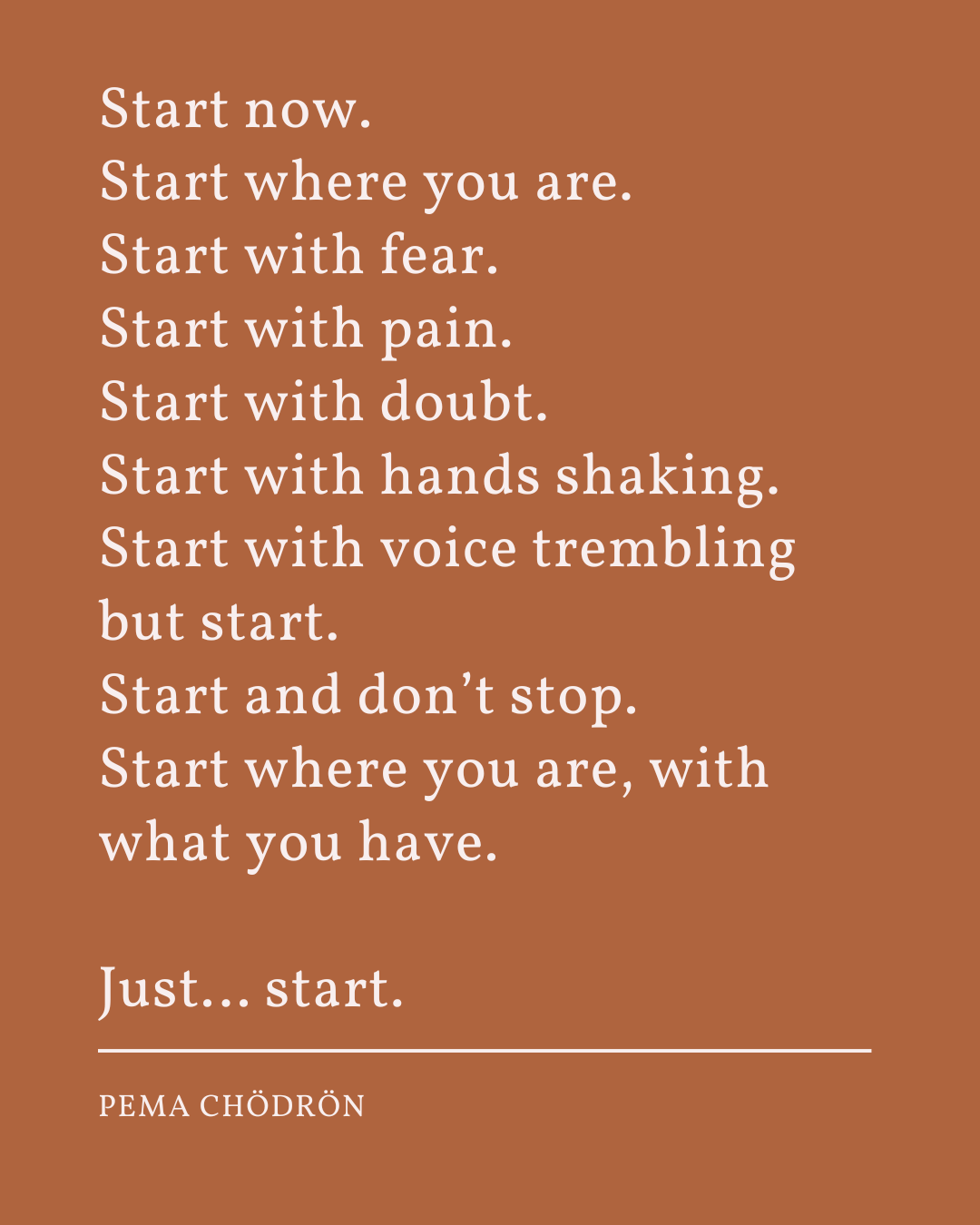
- Pema Chödrön’s quote, at the bottom of this post (every time I read it, I get chills)
- The sound of cellos
- The smell of the first autumn rain in the Mojave desert
- The zingy sharp flavor of Modena balsamic vinegar
- The feel of holding a snake, which also taps into core nostalgic memories from my childhood.
- The feeling of Savasana (or corpse pose) after a yoga session with Adriene
- Bear-hugging someone I love until we laugh
- Playing absurd games with my family
Notice how they involve the five senses, embodied experiences, and connection to others? Now let’s help you create yours.
Create Your Awe List
This is your invitation.
Make a list—five things, fifty things—of what stirs awe in you. Maybe notice not just what, but why it touches you.
Your awe list might include:
- A poem or psalm that brings tears
- The wind through pines
- A moment of stillness after prayer
- A painting that nearly speaks aloud
- A song that wraps around your ribs
Write them down and add to your list over time. Maybe keep a wonder journal where you record the things that delight your sense and root you in experiencing the world.
Keep the list in a place you return to when life feels too fast, too loud, too much. If you need help cultivating a list, I highly recommend listening to Victoria Hutchin’s Soul Gum episode entitled “7 Tiny Ways to Cultivate Awe.” This lawyer-turned-yogi/poet/philosopher offers some truly exceptional tips for slowing down and welcoming awe when we’re programmed in today’s world to go-do-be at ever increasing speeds.
The invitation, or even evocation, is to allow awe root and reconnect you to something larger than yourself. Awe is one of the few things that humbles us and heals us at once. So let wonder find you. And when it does, maybe tell someone about it.
References
Chödrön, P. (2001). Start where you are: A guide to compassionate living. Shambhala Publications.
Keltner, D. (2023). Awe: The new science of everyday wonder and how it can transform your life. Penguin Press.
Hutchins, V. (Host). (2025, March 23). 7 tiny ways to cultivate awe [Podcast episode]. In Soul Gum. Spotify. https://open.spotify.com/episode/63Z8c6PYH2ELJAl7SuIA6G
Oliver, M. (1992). The summer day. Beacon Press.
van Elk, M., Arciniegas Gomez, M. A., van der Zwaag, W., van Schie, H. T., & Sauter, D. (2019). The neural correlates of the awe experience: Reduced default mode network activity during feelings of awe. Human Brain Mapping, 40(12), 3561–3574. https://doi.org/10.1002/hbm.24616
Yoga With Adriene. (n.d.). Yoga With Adriene [YouTube channel]. YouTube. https://www.youtube.com/user/yogawithadriene